




Table of Contents
- Why “Hidden Influence” Matters More in the AI Era
- The Study: How We Found the Media That Punches Above Its Weight
- Niche Sites Drive Brand Influence Beyond Traditional SEO Metrics
- YouTube and Reddit Dominate Platform Affinity
- Small Sites Punch Far Above Their Traffic
- What This Means for PR Strategy
- The Interactive: Find Your Hidden PR Goldmine
- In Practice: How Brands Should Use This Data
- Why This Is an Evergreen Resource (Not a One-Off Study)
- Conclusion
For the past decade, we built Fractl’s expertise around earning high-authority links from both mainstream news publishers (WSJ, NYT, CNBC) and niche-relevant sites (Business Insider, CNET, Investopedia) to drive SEO authority signals and engagement metrics to increase qualified organic traffic for our clients.
Over time, we saw our client campaigns naturally earn cross-channel brand coverage, including TV news features, front-page Reddit posts, and iHeartRadio shout-outs, often stemming from a single editorial feature earned by our Digital PR team through high-touch, research-led pitching.
Today, this type of cross-channel entity and authority building is no longer a bonus; it’s critical to building your brand visibility. Search engines and AI systems increasingly infer authority from how often and where brands are referenced across trusted online platforms. In this environment, credibility comes from sustained, cross-channel brand presence, not links alone.
In 2026, Fractl’s goal extends beyond improving SEO KPIs through brand mentions on authoritative sites. We also aim to strategically reach and meaningfully engage our clients’ target markets by identifying the diverse channels, platforms, and communities where their unique buyer personas are most active.
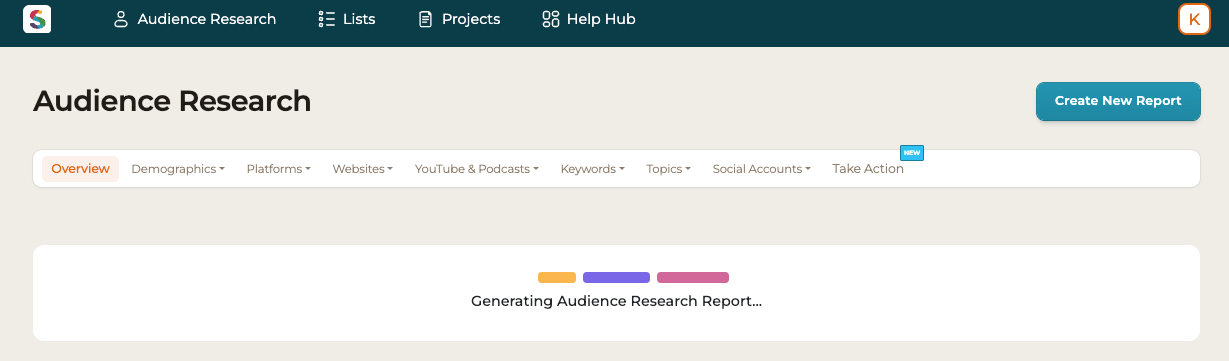
To achieve this goal, our Digital PR team spent much of 2025 using SparkToro’s audience research to uncover a hidden layer of online influence: under-the-radar publications, niche-relevant podcasts, and the social channels and influencers that drive meaningful engagement with the buyer personas our clients care about most.
Key Takeaways
- Traffic is a weak proxy for influence. Many low-traffic sites outperform major outlets in audience affinity with key decision-makers. Hidden gem publishers deliver 1.7x higher audience affinity than major publishers, despite receiving 130x less traffic.
- Entity authority is cross-channel. Brands strengthen their digital footprint by earning visibility across niche sites, podcasts, YouTube, and communities. YouTube dominates affinity in 7 of 8 industries analyzed, with subreddits as the consistent runner-up. That kind of diversified presence is exactly what modern discovery algorithms reward.
- Audience alignment beats reach. Media that over-indexes with CMOs and founders often drives more downstream impact than top-tier press. SaaS audiences show the highest media engagement across every platform (96 average YouTube affinity). The most effective PR strategies target the specific outlets where your buyer personas already spend their attention.
- The best media strategy is role- and industry-specific. No single playbook works across all industries. Insurance is the only vertical where subreddits outrank YouTube as the top affinity platform. Lifestyle sites have the highest average monthly organic traffic (42,728) but the lowest average affinity scores (67). The optimal media mix depends entirely on who you’re trying to reach and why.
Why “Hidden Influence” Matters More in the AI Era
Modern discovery systems don’t evaluate brands in isolation. Google, AI assistants, and recommendation feeds build understanding through co-occurrence: which sites mention you, which audiences engage with those sites, and whether your brand keeps showing up across trusted nodes.
This is what we mean by entity authority: the cumulative signal created when a brand is repeatedly associated with credible sources across channels.
High-affinity niche outlets are disproportionately powerful in this system. Even with modest traffic, they:
- Are frequently cited and shared by domain experts
- Act as source material for larger publications
- Show up repeatedly in AI training and retrieval contexts
- Carry weight within specific industries or roles
In other words, they help machines and humans alike answer the question: “What kind of brand is this and who trusts it?”
The Study: How We Found the Media That Punches Above Its Weight
To identify these hidden PR opportunities, we flipped the traditional approach.
Instead of starting with authoritative publications, we started with niche audiences.
Using SparkToro’s Custom Audience feature, we analyzed which hidden gem websites, YouTube channels, podcasts, and subreddits get the most attention from professional audiences in a variety of industries, including:
- CMOs and marketing leaders
- eCommerce operators and DTC founders
- HR and people ops leaders
- Technical founders and product leaders
From there, we filtered out obvious mega-brands and ranked outlets by affinity score rather than traffic alone. This surfaced a long tail of niche media that rarely appear on PR lists, but consistently command attention from decision-makers.
Niche Sites Drive Brand Influence Beyond Traditional SEO Metrics
Across industries and roles, the same pattern emerges: smaller sites dominate trust. Publications with modest traffic often have the highest affinity with senior audiences, and vertical depth outperforms broad reach every time.
The data below breaks down how niche publishers stack up across eight industries, comparing their audience affinity scores with traditional authority metrics like domain rating, organic traffic, and referring domains.
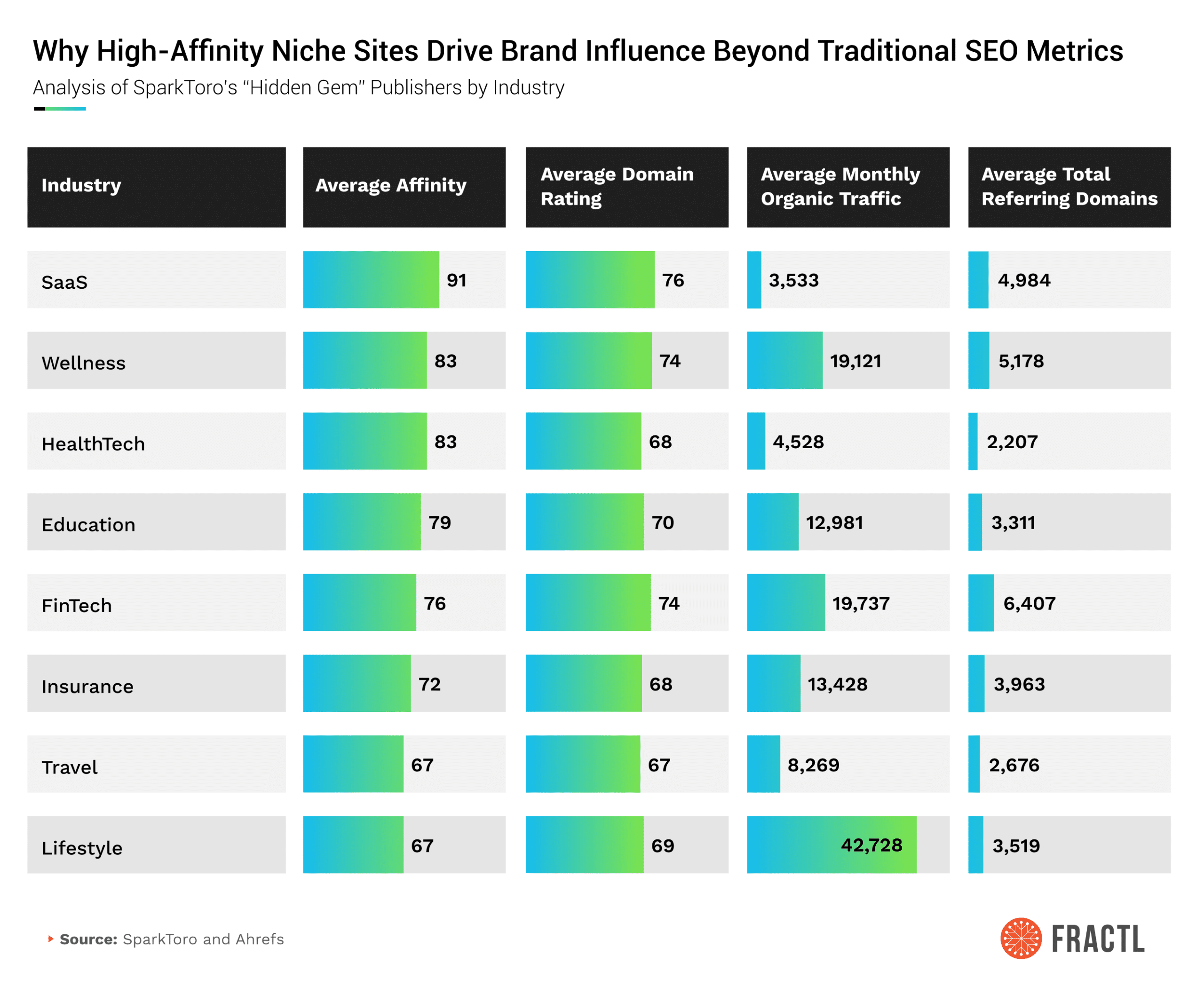
Among the top 50 highest affinity sites per industry, SaaS leads all industries with the highest average affinity score (91), while Lifestyle and Travel sites, despite having significantly higher organic traffic, register the lowest affinity at 67. This confirms that traffic volume is not a reliable indicator of audience influence. The most strategically valuable placements are often on sites your competitors aren’t pitching.
YouTube and Reddit Dominate Platform Affinity
The influence gap between platforms is just as striking. When we examined which media formats drive the highest audience affinity across industries, one pattern stood out: YouTube consistently leads, with subreddits as the most common runner-up.
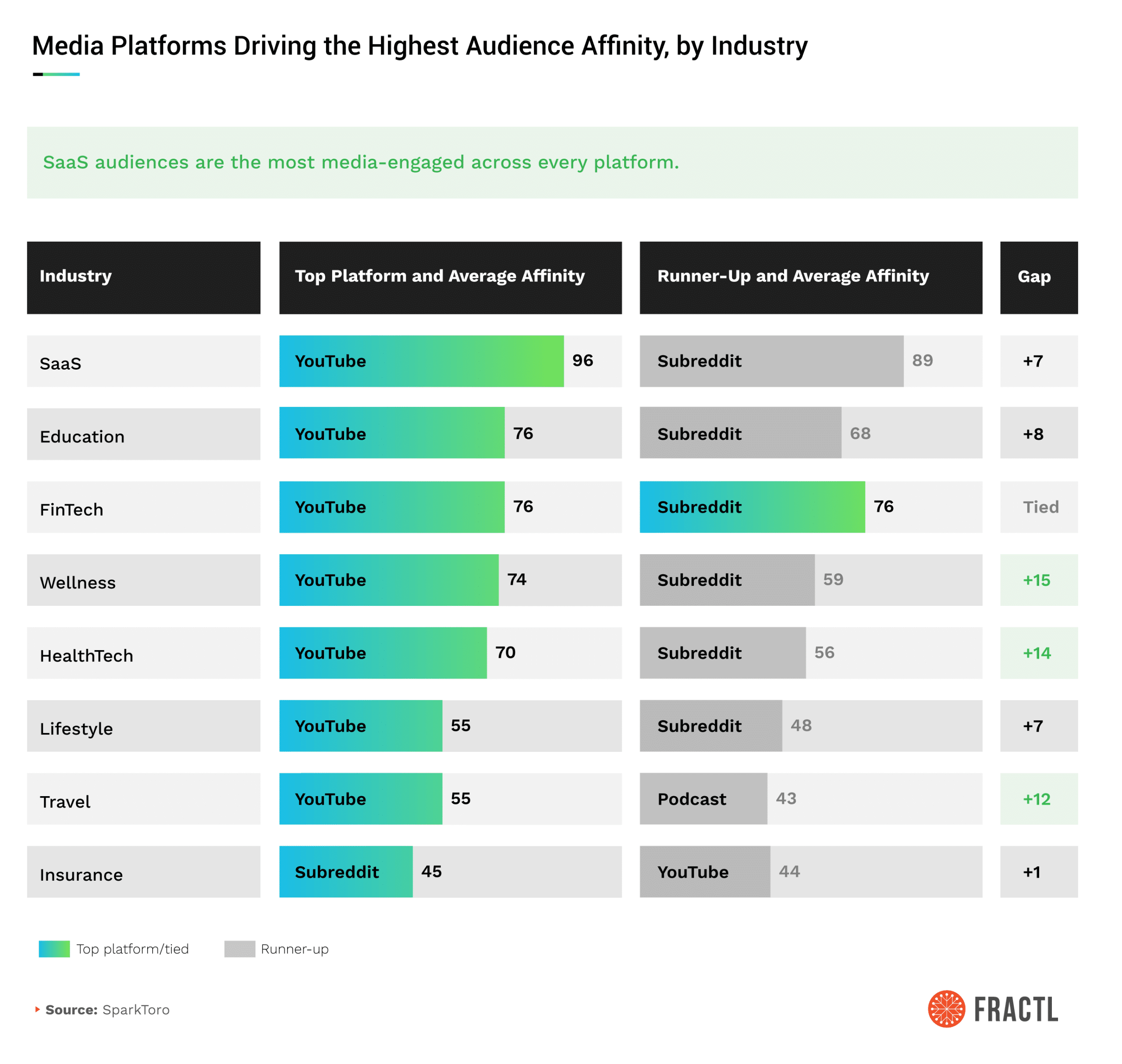
YouTube takes the top position in 7 of 8 industries, with SaaS audiences showing the highest engagement at 96 affinity. Insurance is the sole exception, where subreddits narrowly lead (45 vs. 44). The largest gap between the top platform and runner-up appears in Wellness (+15) and HealthTech (+14), suggesting these industries have especially concentrated YouTube influence.
For PR and content teams, this means an article placement alone may be leaving significant influence on the table. If your earned media strategy stops at article placements, you’re missing where the affinity actually lives. Pitch podcast guests, collaborate with niche YouTubers, and engage in the subreddits your buyers already read.
Small Sites Punch Far Above Their Traffic
The starkest contrast in our research is between hidden gem publishers and major publishers. When we plotted audience affinity against monthly organic traffic, two distinct clusters emerged. And the gap is wider than most PR teams assume.
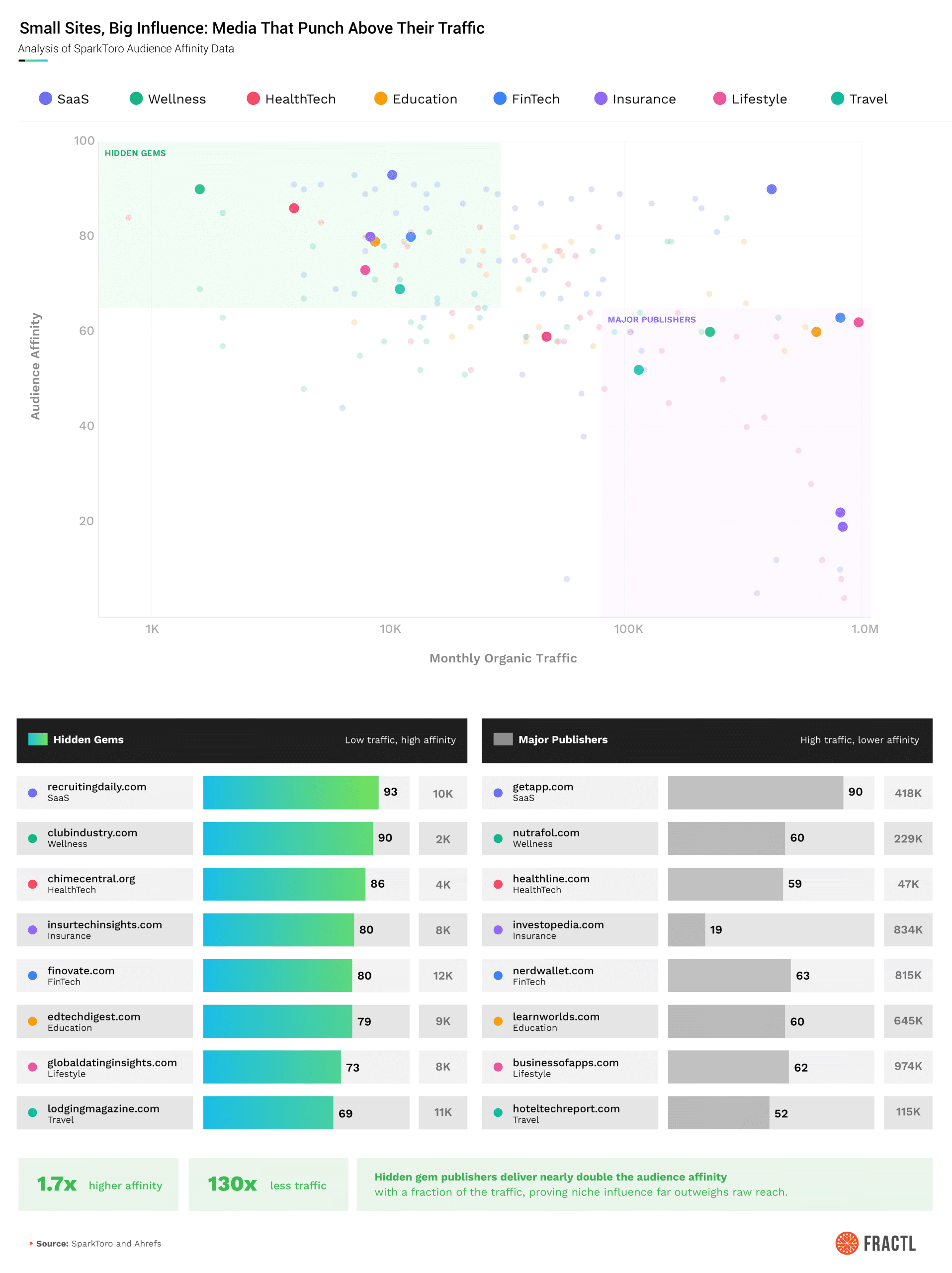
Hidden gem publishers deliver 1.7x higher audience affinity than major publishers, despite receiving 130x less traffic. Consider the contrast: recruitingdaily.com, a SaaS-focused hidden gem with just 10K monthly visitors, achieves a 93 affinity score. Meanwhile, investopedia.com in the Insurance vertical draws 834K monthly visitors but manages only a 19 affinity score with its decision-maker audience.
This means that a feature on a niche site read by 2,000 people in your exact target audience can be more valuable than a mention on a major outlet seen by hundreds of thousands who will never become your customers.
What This Means for PR Strategy
Across industries and roles, the same pattern emerges:
- Smaller sites dominate trust. Publications with modest traffic often have the highest affinity with senior audiences.
- Format diversity matters. YouTube channels, podcasts, and subreddits frequently outrank websites in influence for certain roles.
- Industry specificity beats general business coverage. Vertical depth consistently outperforms broad reach.
The three findings above point in the same direction: the most effective earned media programs don’t optimize for the biggest audience. They optimize for the right one. And that distinction explains why many “successful” PR campaigns feel disconnected from business outcomes. Big traffic numbers look great in a report, but they don’t move the pipeline if the readers aren’t your buyers.
The Interactive: Find Your Hidden PR Goldmine
To make this research actionable, we turned the dataset into an interactive resource.
What the tool does
Users select a role (e.g., CMO, HR leader, founder) and an industry (ecommerce, SaaS, fintech, healthcare, etc.) and instantly see the top niche websites, YouTube channels, podcasts, and subreddits for that audience.
Results can be sorted by audience affinity or estimated traffic, depending on whether the goal is thought leadership, demand generation, product credibility, or building entity authority for AI and search visibility.
In Practice: How Brands Should Use This Data
The takeaway isn’t “stop pitching big publications.” It’s “stop treating them as the whole strategy.”
High-performing earned media programs increasingly blend:
- A handful of top-tier publishers for visibility and authority
- A larger volume of mid-tier publishers for more niche-relevance and repetition
- Mixed media and cross-channel exposure (articles + podcasts + video + communities)
For eCommerce brands, especially, this approach compounds. Repeated mentions across trusted niche sources help search engines and AI systems more confidently associate your brand with your category, improving everything from rankings to AI-generated recommendations.
Why This Is an Evergreen Resource (Not a One-Off Study)
Media ecosystems evolve, but audience behavior changes slowly. By anchoring this resource to roles and industries, rather than fleeting trends, we’ve built something brands can return to again and again as their strategy matures.
As AI systems place more weight on entity-level signals, knowing where influence concentrates becomes as important as knowing how many people you reach.
Conclusion
The biggest PR opportunities aren’t hiding in plain sight. They’re hiding in plain reach.
By looking past traffic and toward audience affinity, brands can uncover a network of media that quietly shapes how they’re perceived by buyers and by algorithms. These under-the-radar outlets aren’t optional. They’re where your reputation actually gets built.
The brands that win won’t be the loudest. They’ll be the ones that keep showing up in the places their audience already trusts.
Methodology
To identify under-the-radar media outlets with disproportionate influence, we used SparkToro’s audience intelligence platform to analyze where specific professional audiences spend their attention online.
We examined multiple decision-maker cohorts, including CMOs and marketing leaders, ecommerce operators and founders, HR and people-ops leaders, and technical founders, and evaluated their top hidden gem websites, YouTube channels, podcasts, and subreddits based on affinity score. In the table, we filtered to include the top 5 of each per industry and role combination.
About Fractl Marketing
Fractl helps companies drive cross-channel brand visibility by transforming proprietary data into newsworthy stories that earn authoritative brand mentions across platforms. Our clients have been featured in top-tier publications, including The New York Times, The Wall Street Journal, CNBC, USA Today, and The Today Show, among other trusted outlets. With over a decade of experience, we’ve helped clients across industries achieve measurable results, from qualified organic traffic to lasting brand authority and trust signals.
Fractl is also the team behind Fractl Agents, where we’re beta testing AI tools and workflows that help marketers automate effective content marketing strategies.
Fair Use Statement
You are welcome to reference or republish findings from this study with attribution. Please link back to Fractl and cite the source. For press inquiries or custom data cuts, contact the Fractl team ([email protected]).